Close
At IBET Expo 2026, industry leaders, policymakers and stakeholders from across India’s bioenergy and gas ecosystem came together to discuss one of the most critical challenges facing the growth of Compressed Biogas (CBG) — creating efficient offtake mechanisms and strengthening grid connectivity.
During the panel discussion on “Efficient Offtake Mechanisms of CBG & Importance of Grid Connectivity,” ACE Director General Mr. Subhash Kumar highlighted the significant role CBG can play in strengthening India’s energy security, reducing dependence on imported fuels and supporting the country’s transition towards cleaner, indigenous energy sources.
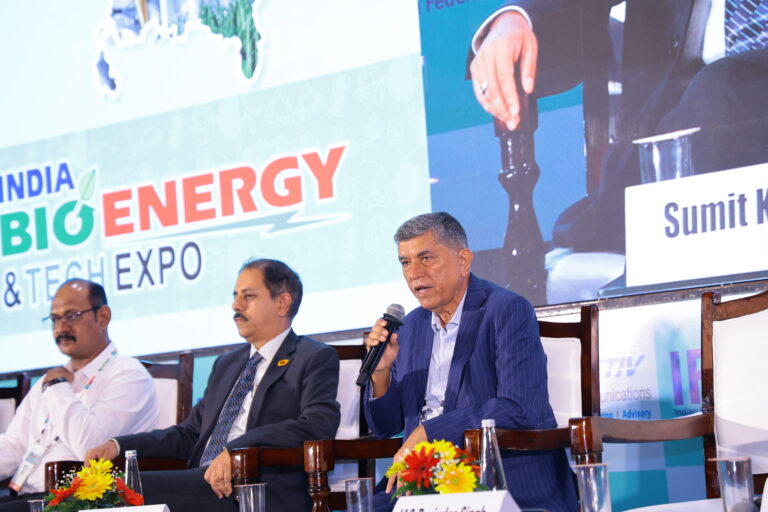
CBG represents an important opportunity for India to convert its abundant organic waste resources into a commercially valuable energy source. Agricultural residues, animal waste, municipal waste and industrial by-products can provide substantial feedstock for CBG production.
However, unlocking this potential requires more than simply increasing production capacity.
As Mr. Kumar emphasized, India must simultaneously work towards increasing overall natural gas consumption, including CNG as well as industrial and commercial applications. A larger and more vibrant gas market would create stronger demand conditions for CBG and other gaseous fuels.
This vision also aligns with the Hon’ble Prime Minister’s call to increase the share of natural gas in India’s energy mix from 6% to 15% in mission mode through ‘Mission Six 2 Fifteen’.
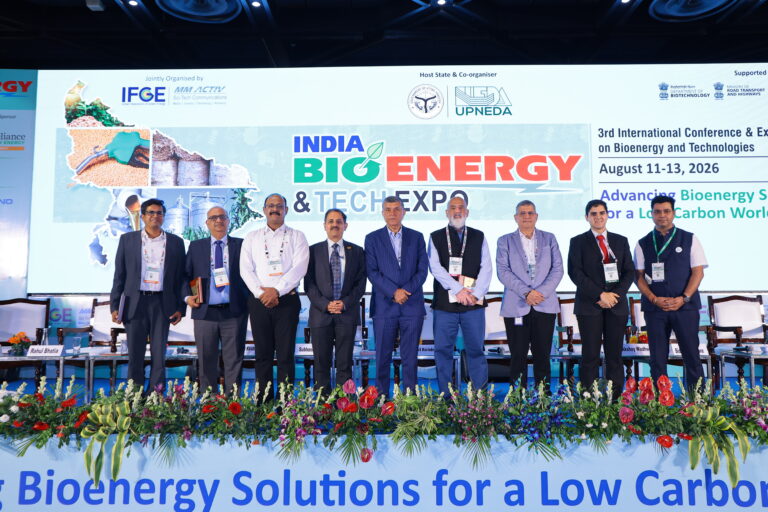
One of the central challenges discussed at IBET Expo 2026 was the need to develop efficient, flexible and commercially viable offtake mechanisms for CBG.
For CBG projects, production alone does not guarantee commercial success. Producers need predictable markets, reliable infrastructure and assured avenues to transport and sell their gas.
Strengthening grid connectivity and evacuation infrastructure can therefore play a transformative role.
Better connectivity can help CBG plants:
The development of CBG clusters around major demand centres could further strengthen this ecosystem by connecting multiple production facilities with established markets and infrastructure
Another important issue highlighted during the discussion was the tax disparity within the gaseous fuels sector.
CBG, as a cleaner methane-based fuel, falls under the GST framework, while natural gas remains outside GST and is subject to varying state-level VAT structures.
The disparity can be significant. For instance, the discussion highlighted that VAT on natural gas in Uttar Pradesh can reach 23.75%, whereas natural gas attracts 0% VAT in Delhi.
Such variations can influence the economics of gas consumption, particularly for industrial and commercial consumers.
To create a more conducive environment for the growth of India’s gas economy, Mr. Kumar called for:
A more harmonised taxation framework could help improve market efficiency while supporting greater adoption of natural gas and CBG.
The discussion also highlighted the potential of Uttar Pradesh to emerge as a leading supplier of clean energy through CBG.
With its substantial agricultural base and availability of organic feedstock, the state has significant potential for developing a large CBG ecosystem.
However, unlocking this opportunity will require simultaneous progress on:
Feedstock → Production → Connectivity → Offtake → Taxation → Market Demand
Strengthening these links could enable Uttar Pradesh not only to consume clean gaseous fuels but also to become an important supplier within India’s emerging renewable gas economy.
Compressed Biogas has the potential to transform India’s waste into energy while strengthening energy security and supporting a more sustainable gas economy.
But the next phase of growth will depend on how effectively India addresses the ecosystem around CBG — particularly offtake, connectivity, taxation, infrastructure and demand creation.
The dialogue at IBET Expo 2026 demonstrates the importance of bringing industry stakeholders together to identify these challenges and develop practical solutions.
ACE remains committed to fostering dialogue, collaboration and policy advocacy to support the growth of India’s gas economy and accelerate the transition towards cleaner, indigenous energy sources.