Close
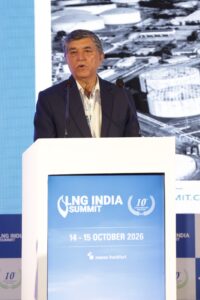
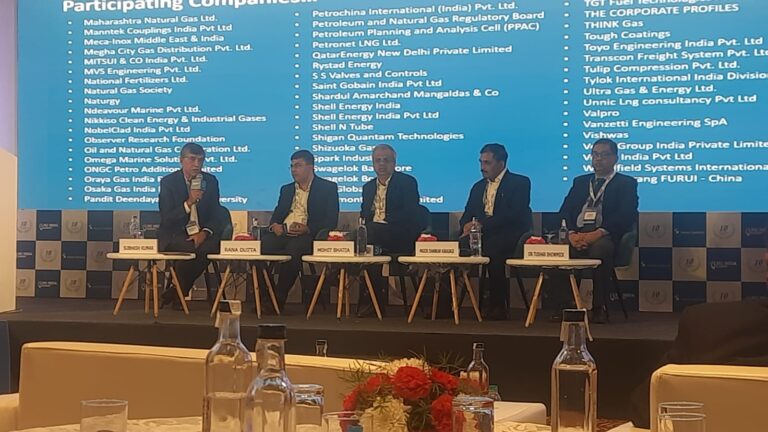
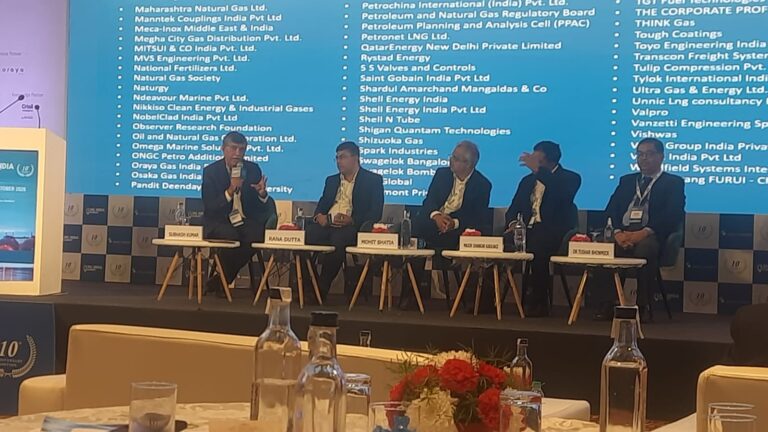
The Association of CGD Entities (ACE) participated in the 10th LNG India Summit 2026, where Shri Subhash Kumar, Director General, ACE and Member of the Advisory Committee of the LNG India Summit, chaired and moderated the Gas Distribution Panel on “The Next 3 Years of India’s Gas Distribution Expansion.”
The discussion focused on the opportunities and challenges shaping India’s City Gas Distribution (CGD) sector, highlighting the need for coordinated policy action, infrastructure development, affordable gas supplies and stronger integration of renewable gases.
India’s CGD sector has emerged as a significant driver of natural gas consumption, accounting for approximately 30% of the country’s gas consumption. With expanding CNG infrastructure, growing piped natural gas (PNG) connections and increasing adoption of CNG vehicles, the sector is well-positioned to support India’s transition towards a cleaner energy mix.
However, natural gas continues to account for approximately 6% of India’s energy mix, compared with around 25% globally. Addressing this gap will require a coordinated national approach.
Shri Subhash Kumar emphasised the importance of elevating Mission NG6to15 into a national programme, bringing together the Central and State Governments, regulators and industry stakeholders to accelerate natural gas adoption.
Expanding pipeline infrastructure alone is not enough; ensuring that connected households actively use PNG is equally important. Faster activation of household connections, affordable connection charges and greater coordination with local bodies, housing societies and LPG distributors can help accelerate adoption.
State-led programmes will be important in translating infrastructure availability into actual household consumption.
With regasified LNG (RLNG) accounting for a significant share of CGD supply, diversification of long-term sourcing and the development of adequate storage infrastructure are essential to managing price volatility.
A reliable and affordable supply of natural gas will be crucial for maintaining consumer confidence and supporting the sector’s long-term growth.
CNG and Compressed Biogas (CBG) can contribute to cleaner mobility and improved energy security. The panel highlighted the need for technology-neutral incentives that consider lifecycle emissions, affordability and energy security, allowing different clean mobility solutions to compete on comparable terms.
Natural gas offers an important opportunity for industries and commercial establishments seeking reliable energy alternatives. However, taxation differences can affect its competitiveness.
Bringing natural gas under the Goods and Services Tax (GST) framework and rationalising State-level taxes could help reduce tax-related complexities and encourage more industrial and MSME conversions to PNG.
Compressed Biogas represents an important opportunity to utilise agricultural residues, organic waste and other biodegradable resources while strengthening domestic energy production.
Meeting the stated CBG blending obligation of 5% by FY 2028–29 will require a substantial increase in production and supply. Pipeline connectivity, consistent quality standards, timely approvals and assured offtake mechanisms will be critical to integrating more CBG plants with CGD networks.
Coordinated implementation of connectivity support under the GOBARdhan initiative can help address infrastructure gaps and unlock the sector’s potential.
LNG virtual pipelines can help supply gas to areas that are awaiting connectivity through conventional trunk pipelines. Indigenous cryogenic equipment, faster regulatory approvals and city-gate LNG storage can support the development of these alternative supply networks.
Such solutions can help extend natural gas access to new markets while larger pipeline infrastructure continues to develop.
The discussions at the 10th LNG India Summit 2026 underscored that India’s gas distribution expansion will depend on more than infrastructure growth. Affordable supply, effective policy coordination, tax rationalisation, consumer adoption and integration of renewable gases will all play important roles.
Achieving the ambitions of Mission NG6to15 requires sustained collaboration among policymakers, regulators, gas companies and industry stakeholders.
The Association of CGD Entities remains committed to supporting this collective effort and advancing a gas distribution ecosystem that contributes to India’s energy security, cleaner growth and long-term sustainability.